Unsere Veranstaltungen
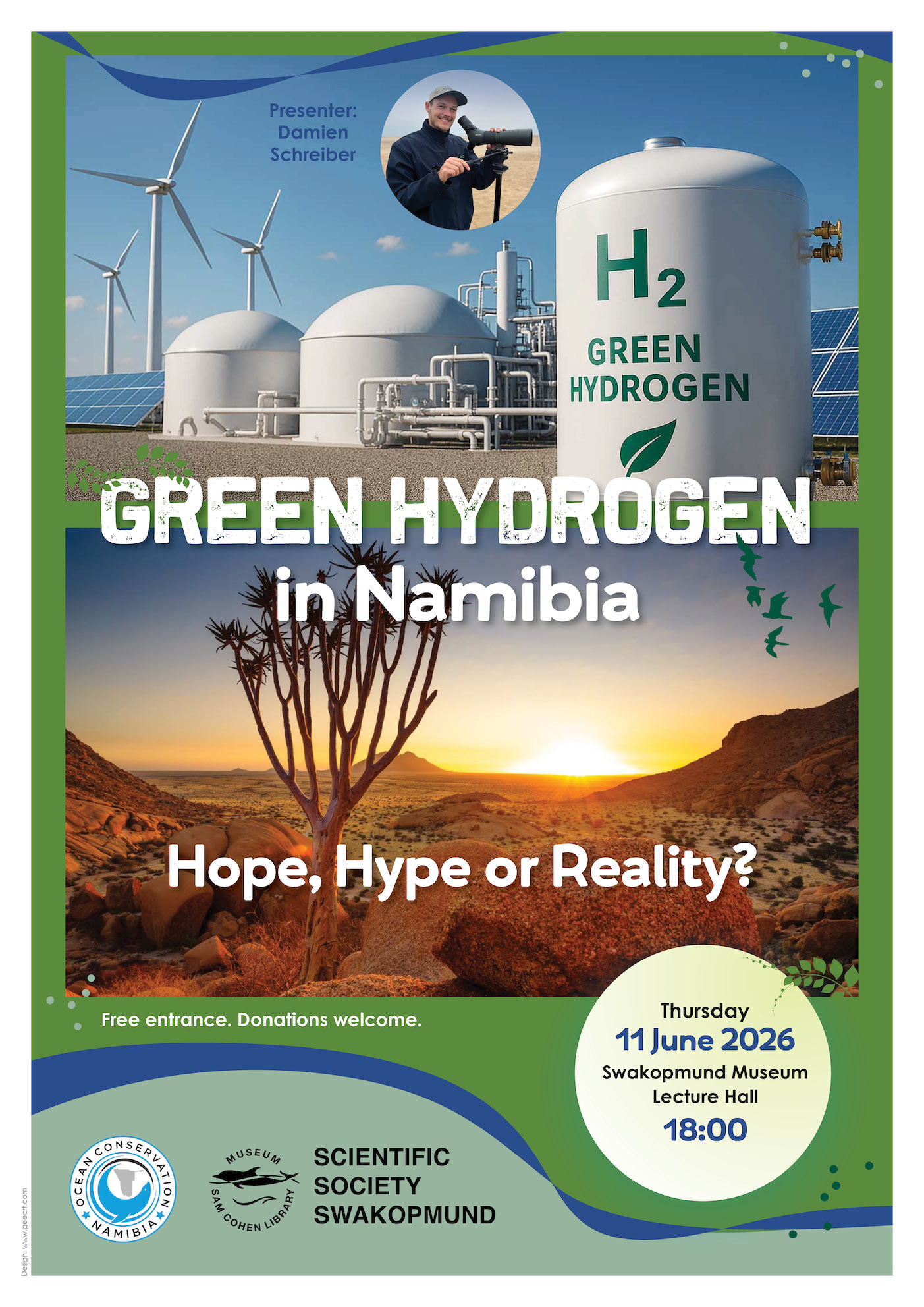
11 June 2026 - 18:00
GREEN HYDROGEN in Namibia
This presentation explores Namibia’s growing role in the global green hydrogen industry and examines both the opportunities and environmental concerns associated with large-scale hydrogen development along the country’s coastline.
It will highlight the need for strong environmental governance, transparent environmental screening, robust marine emergency planning, and fair local participation to ensure that development does not come at the expense of Namibia’s natural heritage and ocean health.
Damian Schreiber is the Marine Conservation Field, Research, and Communications Officer at Ocean Conservation Namibia (OCN). He is committed to evidence-based advocacy, environmental educational campaigns, and public outreach. His work focuses on fostering a deeper connection between Namibian communities and their marine heritage to ensure a sustainable future for the coast.
The talk will be held in English.
The entrance is free, donations are welcome.
- Presenter Damian Schreiber
- Venue: Swakopmund Museum Lecture Hall
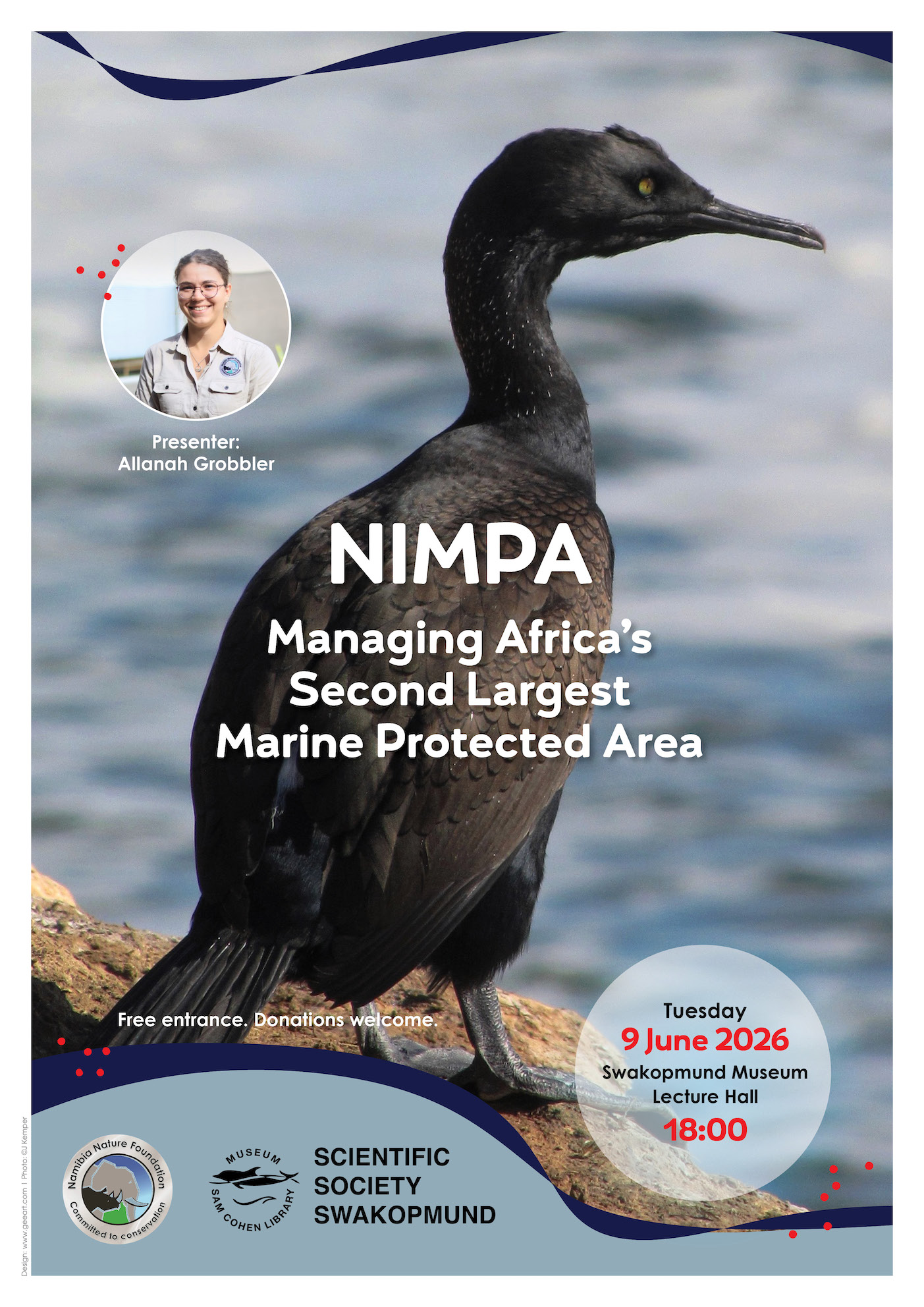
09 June 2026 - 18:00
NIMPA - Managing Africa's Second Largest Marine Protected Area
Africa's second largest marine protected area, the "Namibian Islands' Marine Protected Area (NIMPA)", is situated along Namibia's south coast within the globally significant Benguela Current Large Marine Ecosystem and encompasses approximately 9,500 km² of an ecologically important marine area. This expansive marine protected area (MPA) serves as a critical breeding and feeding refuge for numerous threatened species, including the endemic African penguin, Cape cormorant, Bank cormorant and Cape gannet, alongside diverse cetacean and chondrichthyan species.
Effective management of Africa's second largest MPA demands a collaborative, multi-stakeholder approach. A dedicated team comprising community members, local rangers from the Namibian Foundation for the Conservation of Seabirds, and conservation managers from the Namibian Nature Foundation work in close partnership with international collaborators to support the Ministry mandated with NIMPA's stewardship. This integrated model has generated tangible conservation outcomes while navigating the operational complexities inherent to managing a vast, remote marine landscape.
- Presenter Allanah Grobbler
- Venue: Swakopmund Museum Lecture Hall
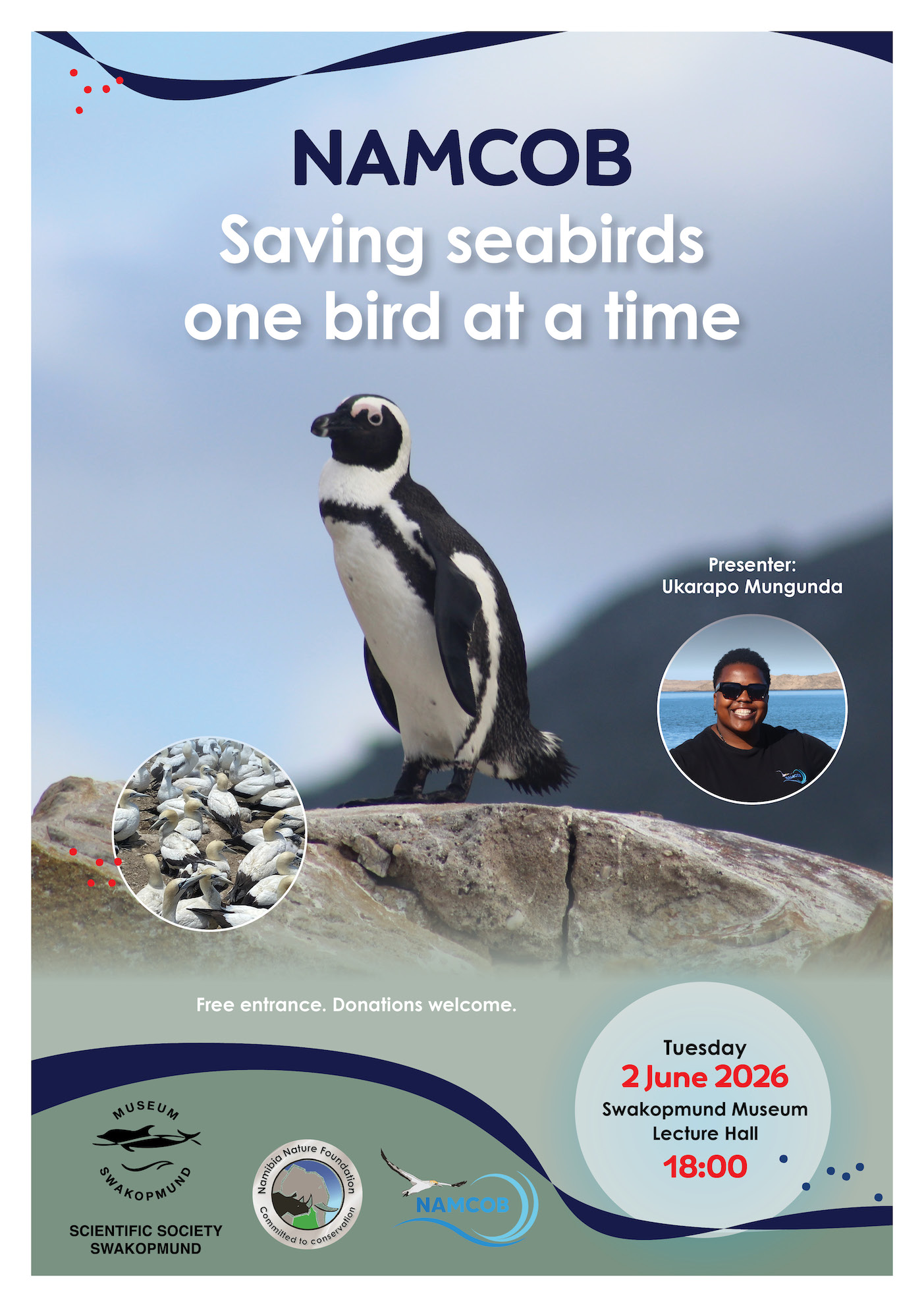
02 June 2026 - 18:00
Saving seabirds one at a time
The Namibian Foundation for the Conservation of Seabirds, or NAMCOB, is dedicated to the conservation and rehabilitation of seabirds along Namibia’s coastline, with a strong focus on the endangered African Penguin and other marine bird species.
At the rehabilitation center in Lüderitz, injured, sick, oiled, and abandoned seabirds are rescued, treated, rehabilitated and released back into the wild. The teams also work on Namibia’s offshore islands, where they monitor breeding colonies, maintain nest boxes, collect scientific data, and help protect critical seabird habitats.
Through conservation, research, rehabilitation, and collaboration, NAMCOB supports the Ministry of Agriculture, Fisheries, Water and Land Reform to protect Namibia’s unique marine ecosystem and ensure a future for our seabirds and oceans.
- Presenter Ukarapo Mungunda (NAMCOB)
- Venue: Swakopmund Museum Lecture Hall
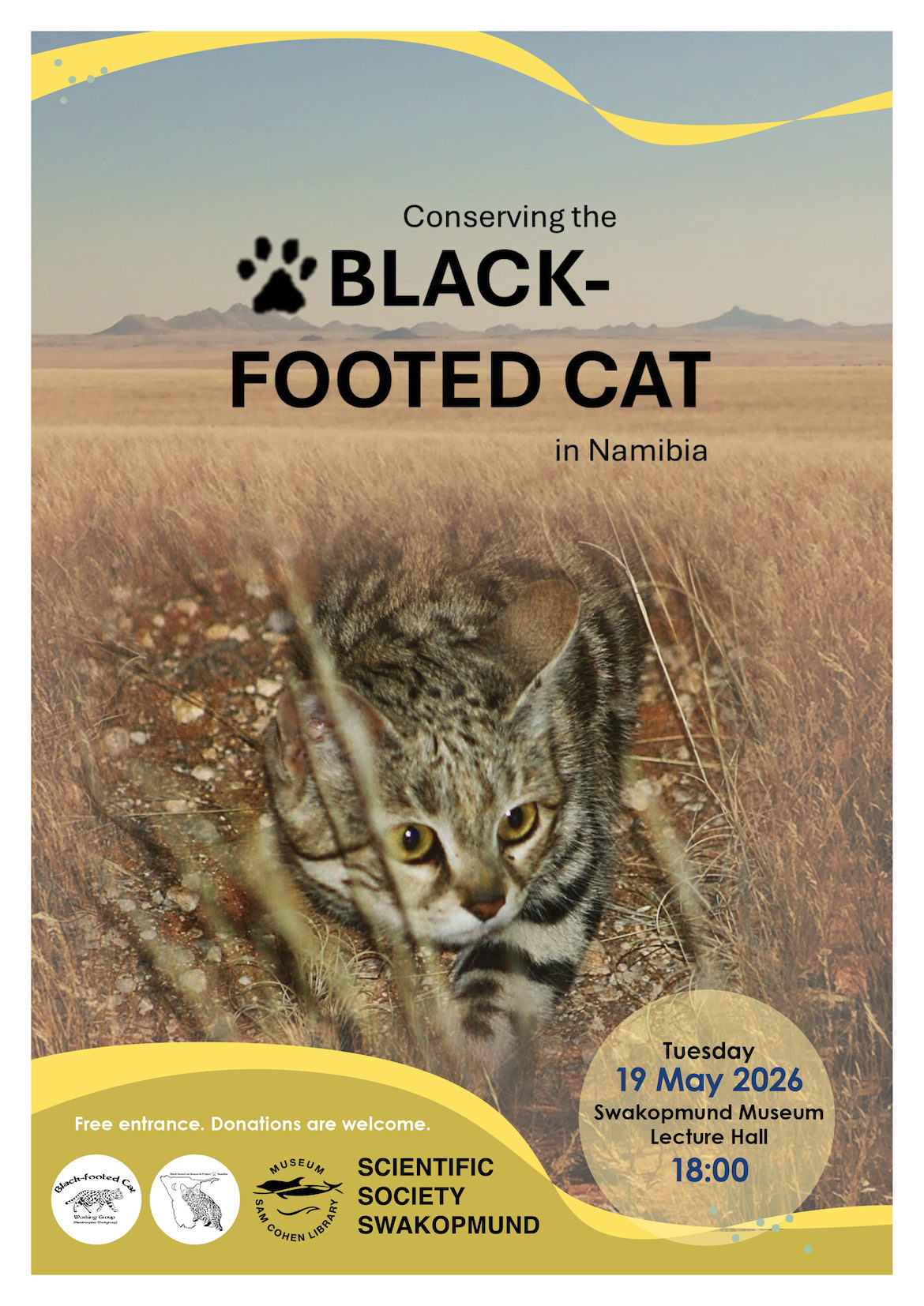
19 May 2026 - 18:00
Conserving the black-footed cat in Namibia
Conserving a rare and elusive wild cat species in southern Africa is challenging. The Black-footed Cat Working Group has been working for Africa’s smallest wild cat since 2009, focusing on research, educational and awareness, and conservation. The group has focused their efforts in the Northern Cape, South Africa, and most what we know, we have learnt from two populations there.
In Namibia few than 80 confirmed records exist. One of the challenges is to collate correct species identification of distribution records. Education and awareness aim to clarify key differences between these two, often misidentified, wild cats. Since 2011, the Black-footed Cat Research Project Namibia has been collecting distribution records of black-footed cats in Namibia. Finally in 2020, we were able to study a population in southern Namibia.
We have gained valuable information on their ecology, biology, and how these small carnivores survive in the arid areas of their range and outside protected areas, and what is needed to identify research priorities and reach effective conservation goals for this vulnerable species.
- Presenter Martina Küsters
- Venue: Swakopmund Museum Lecture Hall
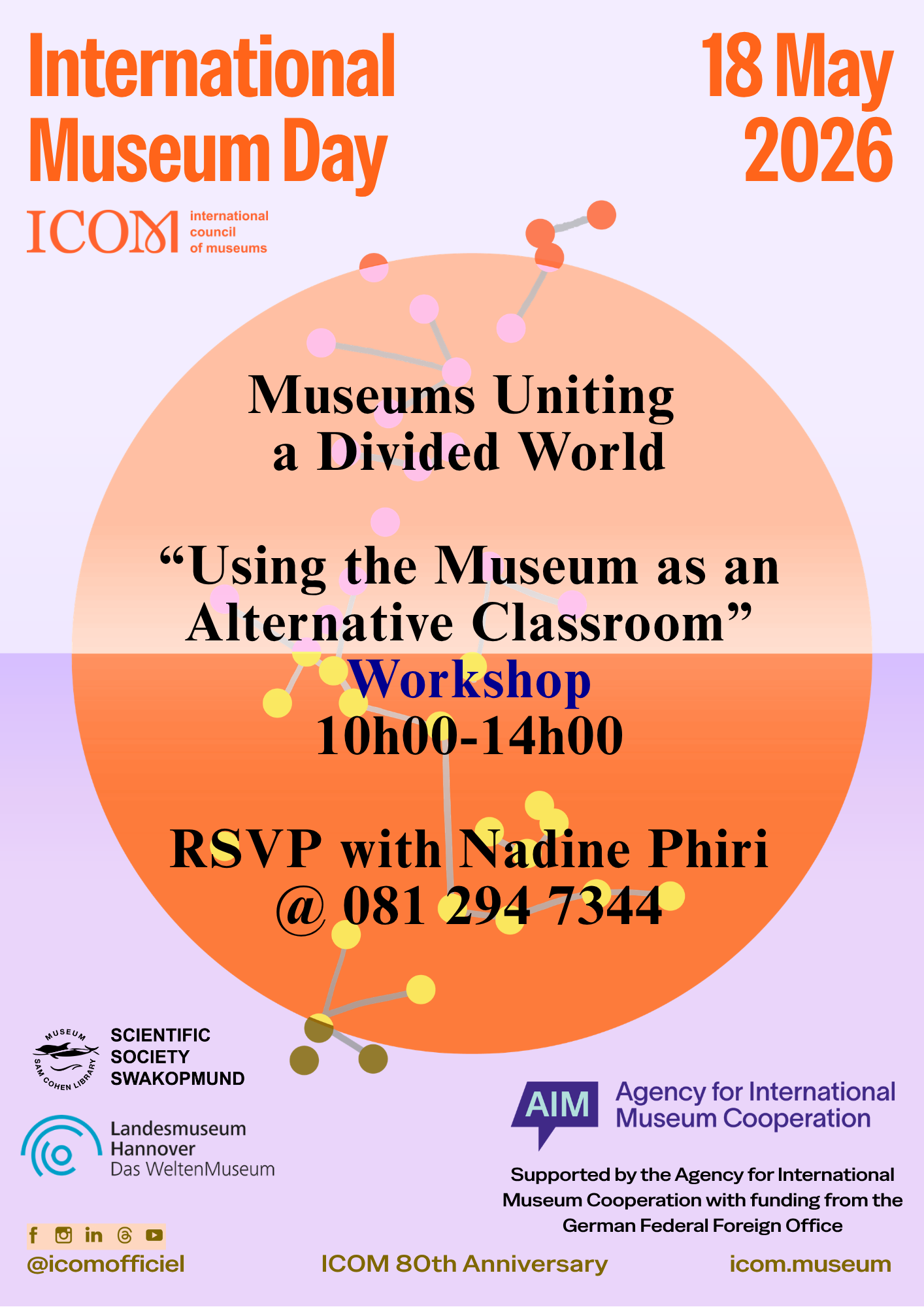
18 May 2026 - 10:00
Workshop: Using the Museum as an Alternative Classroom
The workshop "Using the Museum as an Alternative Classroom," is hosted at the Swakopmund Museum in collaboration with the Landesmuseum Hannover. This event is part of International Museums Day, organized by ICOM under the theme: "Museums Uniting a Divided World."
The workshop will focus on:
A guided tour of the Swakopmund Museum
Survey and idea gathering
Introduction to the Alternative Classroom concept
RSVP: Nadine Phiri – 081 294 7344
- Presenter Swakopmund Museum in collaboration with the Landesmuseum Swakopmund
- Venue: Swakopmund Museum Lecture Hall
Support & Mitgliedschaft
Unterstützen Sie die Wissenschaftliche Gesellschaft Swakopmund, eine gemeinnützige Organisation, durch Spenden, Hilfe oder indem Sie Mitglied werden! Sie können auch Mitglied der Alfons Weber Stiftung werden.